
Rajasthan Unbound
A Royal Adventure
While the rest of the UK and Europe pulls on another layer and watches the sky turn grey, Rajasthan is basking in the finest riding weather on the planet. Between November and February, temperatures across India's most legendary state sit between 15°C and 28°C — crisp, clear mornings, warm sunny afternoons, and evenings cool enough to warrant the satisfaction of a proper jacket. There is no better time to escape winter, and no more rewarding place to escape on a motorcycle.
Rajasthan is not a destination. It is a civilisation. The largest state in India, covering an area larger than Germany, it is a land that has been ruled by maharajas, fought over by empires, and shaped by centuries of Rajput warrior culture into something that feels quite literally — built for grandeur. The forts here are not ruins. They are statements. Mehrangarh in Jodhpur rises 122 metres from a sheer rocky outcrop above the Blue City with the authority of something that was never intended to fall. Amber Fort outside Jaipur reflects in the still water of Maota Lake at dawn in a way that makes the 16th century feel suddenly close. Jaisalmer's Golden Fort glows amber in the afternoon sun as the sandstone itself is lit from within — and unlike most great forts of the world, people still live inside its walls.
This is also a route of pure, flowing tarmac — smooth desert highways that unspool across the Thar Desert for hundreds of kilometres with almost no traffic, where the horizon sits so far away that the road appears to vanish into sky. No mountain passes, no river crossings, no altitude to manage. Just open road, warm air, and a landscape that changes character every hundred kilometres — from the fresco-painted havelis of the Shekhawati region to the camel-track dunes of Sam, the leopard-populated granite hills of Jawai to the lake palaces of Udaipur shimmering at dusk. Rajasthan rewards the rider who wants to move through history at pace — and Royal Adventure Moto Tours has built an expedition that does exactly that, with full support throughout and access to experiences that most visitors to Rajasthan never reach.
Route highlights: Delhi · Mandawa · Bikaner · Jaisalmer · Sam Sand Dunes · Jodhpur · Jawai (Leopard Hills) · Udaipur · Jaipur · Delhi
Best time to ride: November to February
Ride character: Tarmac Touring — smooth desert highways, open roads, and heritage routes through India's royal heartland
Cultural experience: Living forts, leopard safaris, desert camping, lake palaces, Rajput cuisine, and 2,200 kms of some of India's finest riding roads
FULL ITINERARY
Day 1 - Arrival in Delhi & Briefing (Altitude: 216m / 709ft)
Delhi announces itself on arrival — noise, colour, and the particular energy of a city that has been the capital of empires for a thousand years. The Royal Adventure team is on hand from the moment of arrival to manage transfers and hotel check-in. The evening brings the group together for the pre-departure briefing: route overview, motorcycle handover, safety procedures, and a first look at thirteen days of India's most extraordinary riding. For those with energy after the flight, Delhi's iconic landmarks are close — India Gate, the Red Fort, and the vast Mughal geometry of Humayun's Tomb are all within reach for an evening recce. Tomorrow, the royal state of Rajasthan begins.
Day 2 - Delhi to Mandawa (Altitude: 330m / 1,083ft)
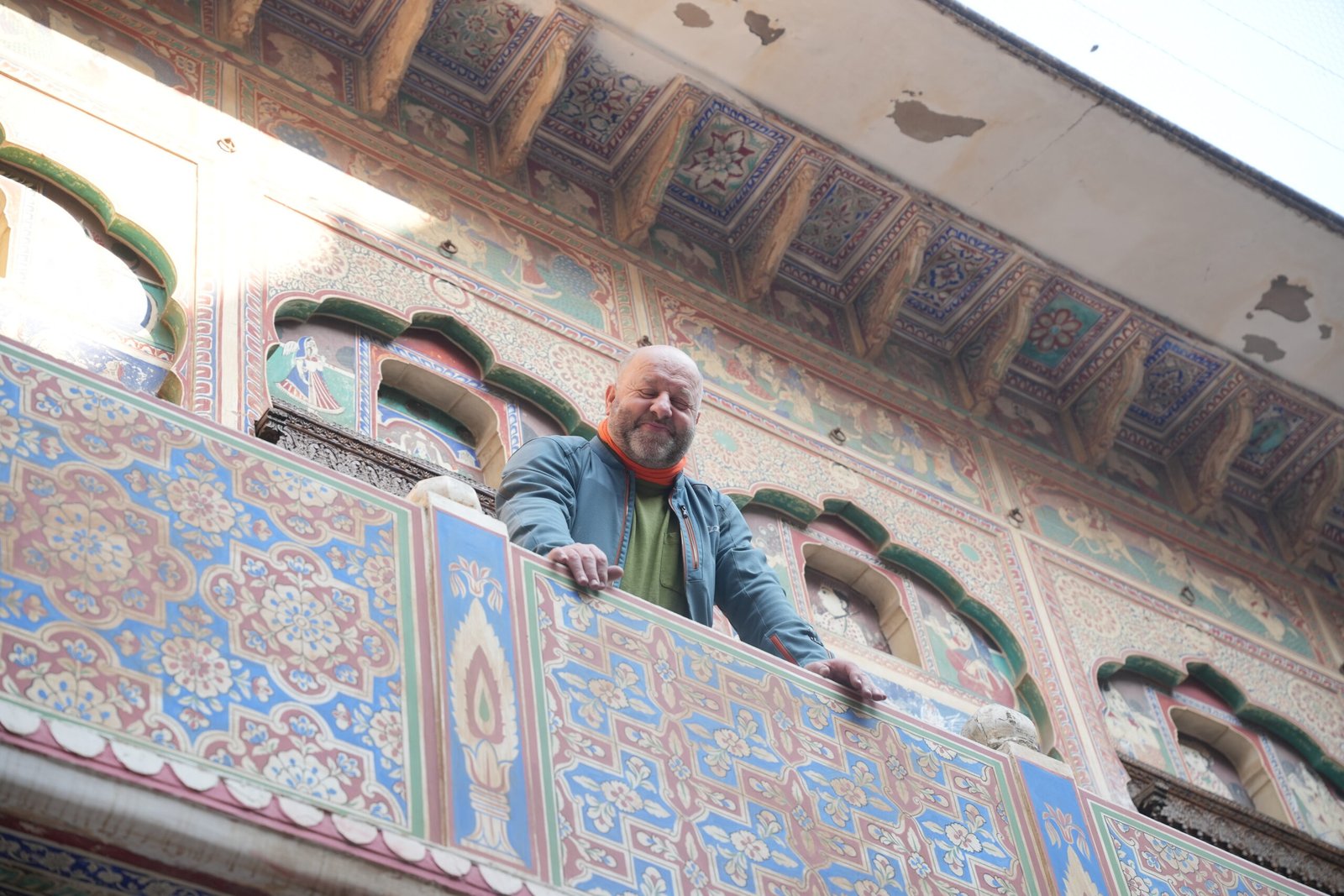
Distance: 250 kms · Approx. Time: ~6 hrs The ride out of Delhi heads southwest into Haryana before crossing into Rajasthan's Shekhawati region — a stretch of semi-arid countryside dotted with small market towns and, entirely without warning, some of the most extraordinary painted buildings in the world. Mandawa is the jewel of Shekhawati: a town whose merchant families, having made fortunes in the 18th and 19th centuries trading between Delhi and the ports of the west coast, spent those fortunes decorating their havelis — grand townhouses — with floor-to-ceiling frescoes depicting everything from mythology and royal hunts to steam trains and the Wright Brothers' first flight. Walking the lanes of Mandawa at dusk, past facades that tell stories in painted detail, is an introduction to Rajasthan that sets the tone for everything that follows.
Day 3 - Mandawa to Bikaner (Altitude: 234m / 768ft)
Distance: 200 kms · Approx. Time: ~5 hrs The road from Mandawa to Bikaner crosses the eastern edge of the Thar Desert — flat, wide open, and increasingly quiet as the kilometres accumulate. Bikaner is a walled city founded in 1488 by Rao Bika, a Rajput prince who rode into the desert and simply decided to build his own kingdom. The city he left behind is anchored by Junagarh Fort — a 16th-century sandstone and marble complex that was never captured by any enemy force in its entire history. Its interiors are among the most elaborately decorated of any fort in India: carved jali screens, gilded ceilings, mirrored chambers, and a throne room that conveys, without ambiguity, what it meant to hold power in medieval Rajasthan. The evening in Bikaner's old city, with its narrow lanes and camel-hide craftsmen still working by hand, belongs entirely to the riders.
Day 4 - Bikaner to Sam Sand Dunes (Altitude: 225m / 738ft)
Distance: 380 kms · Approx. Time: ~8 hrs The longest riding day of the expedition — and the most cinematic. The road from Bikaner toward Jaisalmer runs straight and smooth through the Thar Desert for hour after hour, the landscape stripping back to sand, scrub, and sky in a combination that is, at speed on a motorcycle, deeply satisfying. Jaisalmer appears like something conjured rather than built — a golden sandstone city rising from the desert floor, its fort walls glowing in the afternoon sun exactly as they have for eight centuries. The convoy passes through but does not stop: the destination today is Sam, 42 kilometres further into the desert, where the great sand dunes of the Thar begin in earnest. The afternoon brings a jeep safari into the dunes — serious dune-bashing across the Thar's most dramatic terrain — followed by a camel ride as the light turns gold and the sun drops toward the horizon. Dinner is around a campfire in the desert, with traditional Rajasthani music and the particular silence of a place where the nearest city lights are very far away. Overnight in desert camp under a sky full of stars.
Day 5 - Sam Desert to Jaisalmer (Altitude: 225m / 738ft)
Distance: 42 kms · Approx. Time: ~1.5 hrs A short, easy morning ride back into Jaisalmer — and a full day to give the Golden City the time it deserves. Jaisalmer Fort is one of the world's few living forts: a UNESCO World Heritage Site with a population of several thousand people still residing within its medieval walls, going about their daily lives as they have done for generations. The lanes inside the fort wind between temples, palaces, merchant houses, and rooftop cafés with views over the desert that extend to the horizon. Patwon Ki Haveli — a row of five interconnected havelis built by a wealthy merchant family in the early 19th century — is the most elaborately carved building in the city, a masterpiece of Rajasthani stonework. Gadisar Lake, just outside the city walls, offers a quieter, more contemplative experience: a medieval reservoir ringed by temples and bathing ghats where herons stand in the shallows and the fort rises on the skyline above. The afternoon is free to explore at each rider's own pace.
Day 6 - Jaisalmer to Jodhpur (Altitude: 231m / 758ft)
Distance: 300 kms · Approx. Time: ~6–7 hrs The road from Jaisalmer to Jodhpur is one of the finest tarmac runs in Rajasthan — smooth, fast desert highway through Pokhran and Phalodi before the landscape gradually shifts from sand dunes and desert scrub to the rockier, more dramatic terrain of the Marwar region. En route, the ancient temple complex at Osian — a cluster of beautifully preserved 8th to 11th-century Jain and Hindu temples rising from the desert — is a stop that most visitors to Rajasthan never make and none who stop regret. Jodhpur announces itself first by sound — the Blue City is a densely packed, intensely alive medieval city — and then, unmistakably, by sight: Mehrangarh Fort, one of the largest forts in India, rising 122 metres from a bare rock outcrop above the rooftops of the city it has watched over for five and a half centuries.
Day 7 - Jodhpur to Jawai (Altitude: 250m / 820ft)
Distance: 150 kms · Approx. Time: ~3 hrs A shorter riding day with outsized rewards. The morning is set aside for Mehrangarh Fort — and it earns the time. The museum inside the fort is among the best in Rajasthan, its galleries holding Mughal armour, royal palanquins, howdahs, and paintings that trace five centuries of Rajput history with extraordinary depth. The views from the ramparts over the blue-painted rooftops of Jodhpur below — and the desert stretching to the horizon beyond — are the kind of panorama that justifies crossing time zones to stand in front of. On the road south toward Pali, a stop at Bullet Baba Temple is compulsory for any rider on a Royal Enfield — a roadside shrine to a Royal Enfield motorcycle, worshipped daily by local communities who believe it protects travellers on the road. The destination for the night is Jawai — one of the most quietly remarkable wildlife destinations in all of India. The granite boulder hills around the Jawai Bandh reservoir support one of the highest densities of leopards found anywhere in India outside a national park. They live freely here, moving between the boulders and the villages, in an arrangement that has existed between the big cats and the local Rabari communities for generations.
Day 8 - Jawai Leopard Safari & Ride to Udaipur (Altitude: 582m / 1,909ft)
Distance: 85 kms · Approx. Time: ~3 hrs The alarm goes before sunrise. By 5:30am, the convoy is in open jeeps moving through the granite hills of Jawai in the grey pre-dawn light, guided by trackers who know these leopards — know their names, their territories, their habits, and exactly which boulder each one prefers at different times of day. The chances of a sighting here are genuinely exceptional — around 90% on a morning safari — and unlike the managed encounters of most big cat reserves, these are wild animals living entirely on their own terms. Crocodile sightings along the reservoir bank are an almost certain bonus. Watch the sun rise over the boulders with a cup of chai in hand, in the knowledge that the morning has already delivered more than most wildlife experiences manage in a week. The short afternoon ride to Udaipur drops into the Aravalli hills — a complete change of landscape after the desert — before the road delivers one of Rajasthan's most affecting arrivals: the first glimpse of Lake Pichola and the city built around it.
Day 9 - Udaipur - The City of Lakes (Altitude: 598m / 1,962ft · Rest Day)
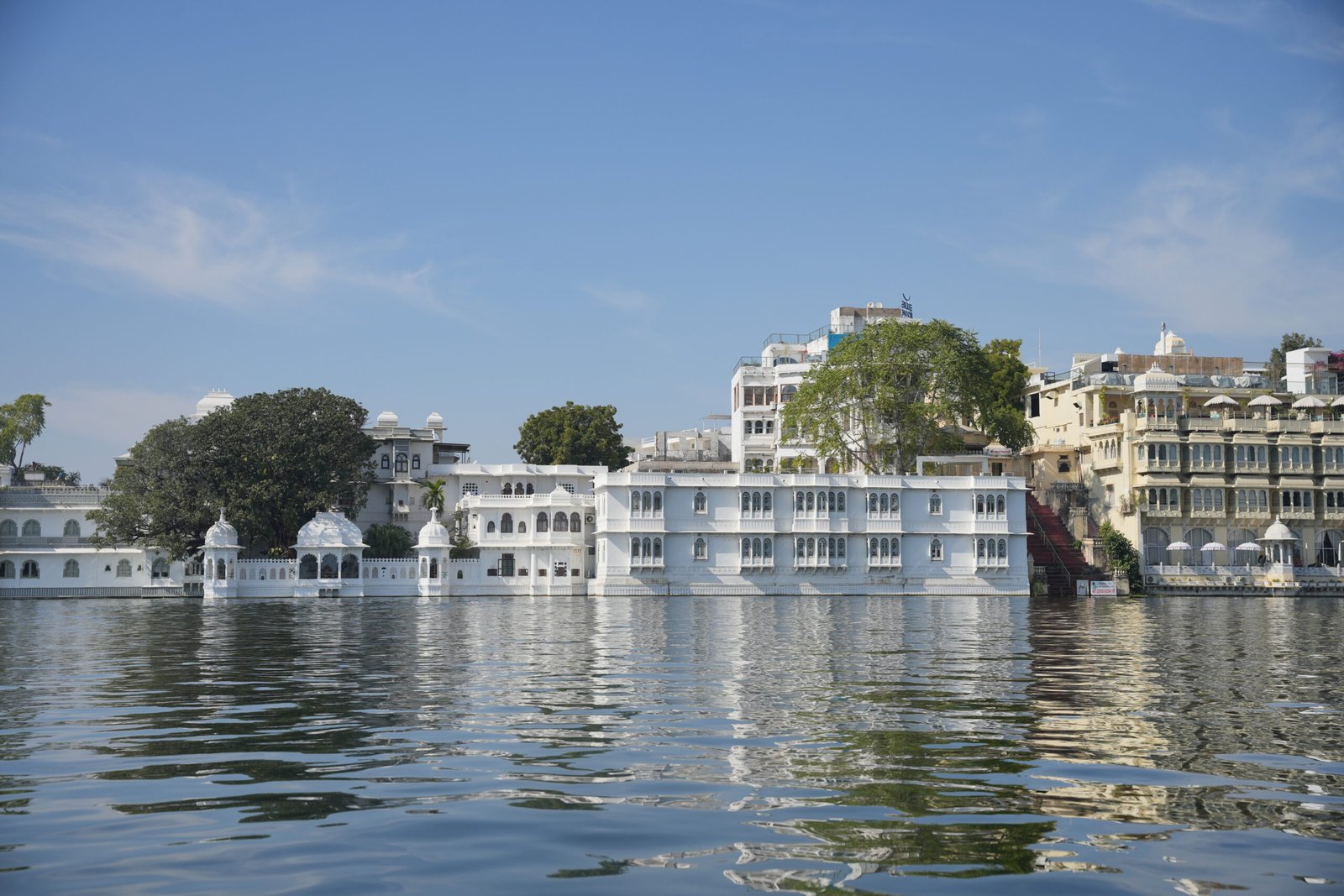
Udaipur earns its reputation as one of the most beautiful cities in the world without effort and without pretension. Built around a series of interconnected lakes in the Aravalli hills, it is a city of extraordinary visual coherence — white marble palaces reflected in still water, narrow lanes rising steeply between painted walls, and a quality of light in the late afternoon that photographers spend their entire careers chasing. The City Palace, the largest palace complex in Rajasthan, sits above Lake Pichola with a scale and decorative richness that requires several hours to do justice to. A boat ride on the lake itself — gliding past Jag Mandir, the island palace where Shah Jahan is said to have taken shelter before building the Taj Mahal — is among the most serene hours available anywhere in India. The Jagdish Temple, a 17th-century Vishnu shrine a short walk from the palace gates, hums with genuine daily worship in a way that is both moving and entirely open to visitors. The evening offers traditional Rajasthani folk music and dance at one of the city's heritage venues — an experience that belongs to Udaipur specifically, and nowhere else.
Day 10 — Udaipur to Jaipur (Altitude: 427m / 1,401ft)
Distance: 400 kms · Approx. Time: ~8 hrs · Altitude: 427m / 1,401ft The longest ride of the second half of the tour, and one that earns its distance through variety. The road north from Udaipur climbs through the Aravalli hills past Nathdwara — home to the Shrinathji Temple, one of the most significant pilgrimage sites in India — before the landscape opens into the semi-desert plains of central Rajasthan. The highway slides into Jaipur as the sun dips is a fitting close to a long, full day.
Day 11 - Jaipur - The Pink City (Altitude: 431m / 1,414ft · Rest Day)
Jaipur was planned in 1727 by Maharaja Jai Singh II — an astronomer king who designed his capital on Vedic grid principles and later painted its buildings a distinctive terracotta pink to welcome the visiting Prince of Wales. The result is a city with an extraordinary sense of architectural coherence, anchored by landmarks that each justify their own half-day. Amber Fort, 11 kilometres outside the city, is arguably the finest fort in Rajasthan — a layered complex of Rajput and Mughal architecture climbing the hillside above Maota Lake, its mirror-work Sheesh Mahal catching the light in a way that has to be seen in person to be understood. Hawa Mahal — the Palace of Winds, with its 953 intricately carved windows designed to allow royal women to observe street life unseen — is the most-photographed building in Jaipur and justifiably so. The City Palace museum, the floating Jal Mahal rising from Man Sagar Lake, and the ancient astronomical instruments of Jantar Mantar fill whatever remains of the day. The evening light and sound show at Amber Fort — narrating five centuries of Rajput history through dramatic illumination and music — closes the day on exactly the right note.
WHAT'S COVERED
Inclusions
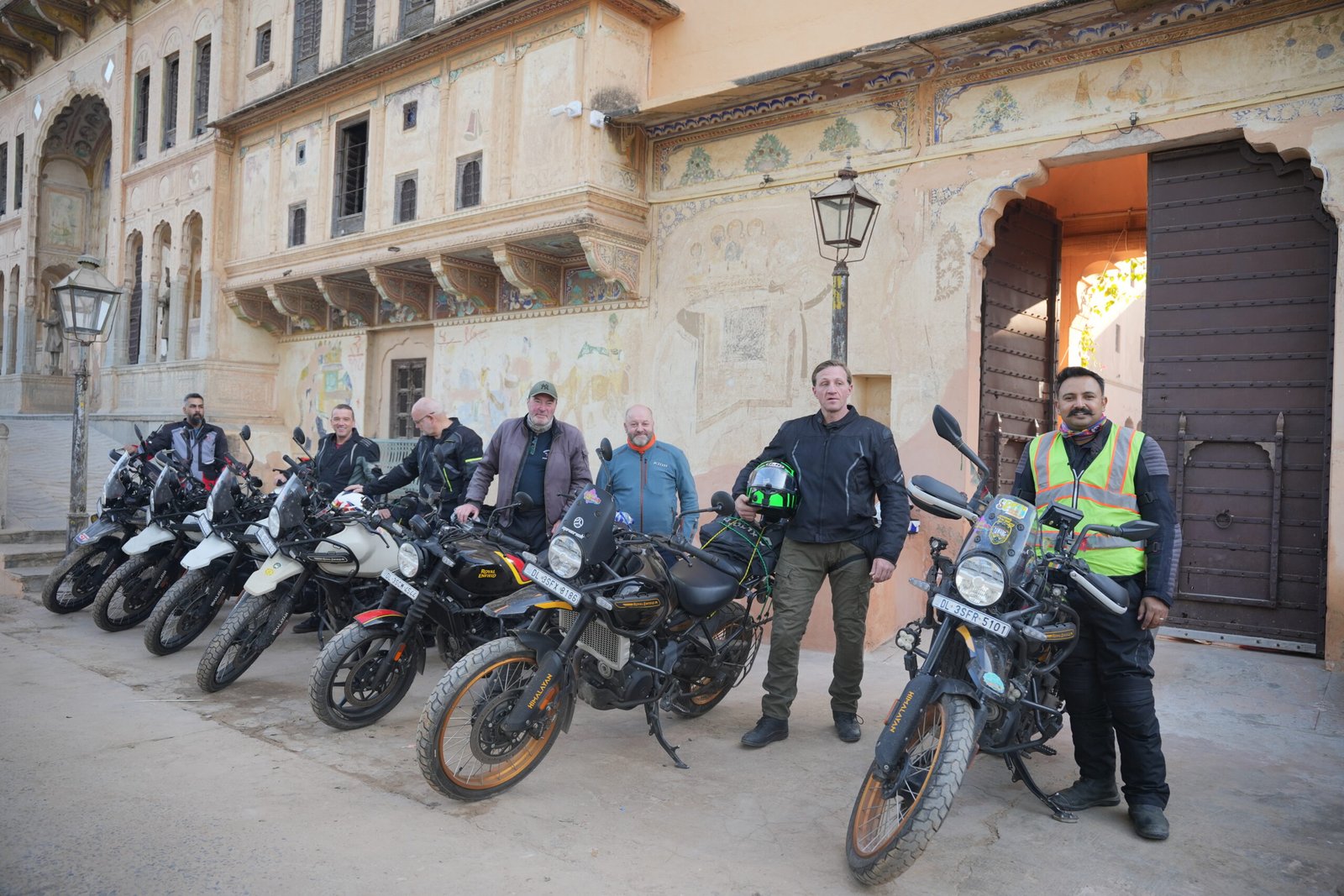
- Royal Enfield motorcycle — Himalayan 450cc, Guerrilla 450, Bear 650, or other suitable RE models currently in production — with fuel for the entire official itinerary (model subject to availability; the team will advise on the best fit)
- 12 nights accommodation on a twin-sharing basis in premium handpicked heritage hotels, boutique properties, and luxury desert camps
- All meals — buffet breakfast and dinner — plus lunch, tea, coffee, and mineral water refreshments throughout the ride
- Desert jeep safari at Sam Sand Dunes and leopard safari at Jawai included
- 24/7 dedicated medical support with a full-time professional medic accompanying the convoy, carrying emergency medical kits
- Complete mechanical support by certified Royal Enfield specialist technicians, with a dedicated luggage and spares vehicle
- Entry tickets to all forts, palaces, monasteries, and heritage sites on the itinerary
- Road tax, green tax, and all applicable permits
- Creative team — photographer and videographer with drone — capturing personalised photos and videos of the entire ride
- Customised ride T-shirts and exclusive Royal Adventure Moto Tours memorabilia
- Experienced ride leaders guiding the group throughout the full itinerary
- Backup vehicle available for family or friends travelling as non-riders (on request)
Exclusions
- Personal riding kit — armoured jacket, trousers, helmet, gloves, and boots
- Personal expenses, tips, souvenirs, and laundry
- Any costs arising from unforeseen conditions — road closures, weather-related delays, additional accommodation or flight bookings
- Visa costs, international flights, and alcohol
- Comprehensive personal travel and medical insurance — mandatory, and must be purchased in the UK prior to departure
- Fully refundable motorcycle security deposit of £200, payable at the pre-departure briefing
- Applicable GST (Indian tax) on tour services
- Anything not explicitly listed under Inclusions above
Rajasthan is the most rider-friendly state in India — the roads are good, the distances are manageable, and the weather between November and February is as close to perfect riding conditions as it is possible to find. What Royal Adventure Moto Tours adds is the depth of access that comes from years of building relationships with the people, places, and experiences that make the difference between a tour and a journey. The leopard encounters at Jawai who know every animal by name. The heritage properties that sit inside fort walls rather than outside them. The desert camp at Sam where the evening belongs entirely to the group. Every element of the support structure is in place and every day has been designed to deliver more than the obvious — because Rajasthan, for the right rider with the right team, is capable of delivering far more than most people expect of it.
For bookings, availability, and any questions about the tour, get in touch with the Royal Adventure Moto Tours team. A detailed pre-departure information pack is shared with all confirmed riders — covering kit lists, fitness preparation, route, and what to expect on the road.
You Might Also Love
More Journeys Crafted
for Curious Travelers
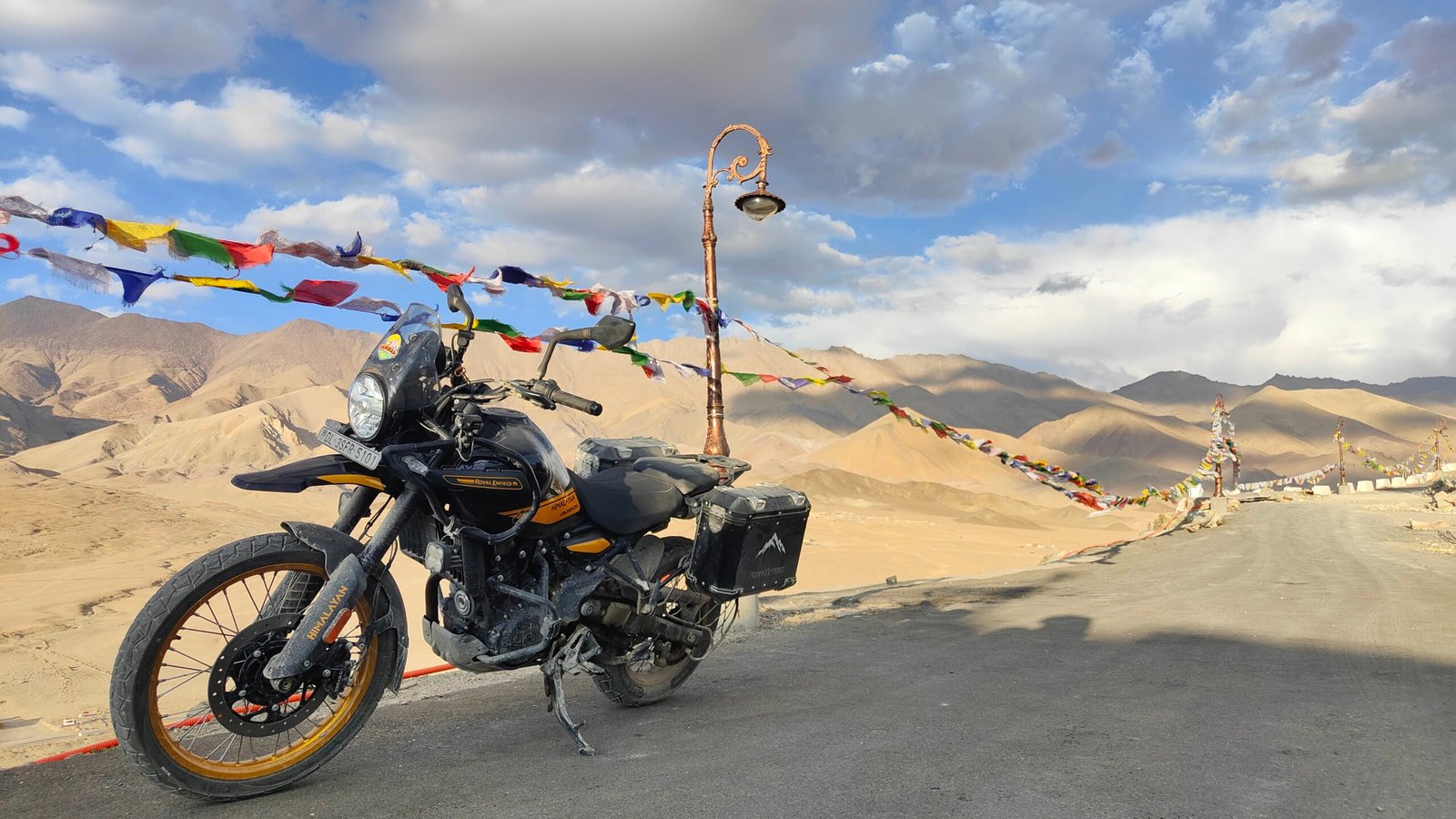
Ladakh Unbound — A Royal Adventure
10 Nights · 11 Days · Leh to Leh · Max Altitude 5,798m / 19,024ft · ~1,200 kms
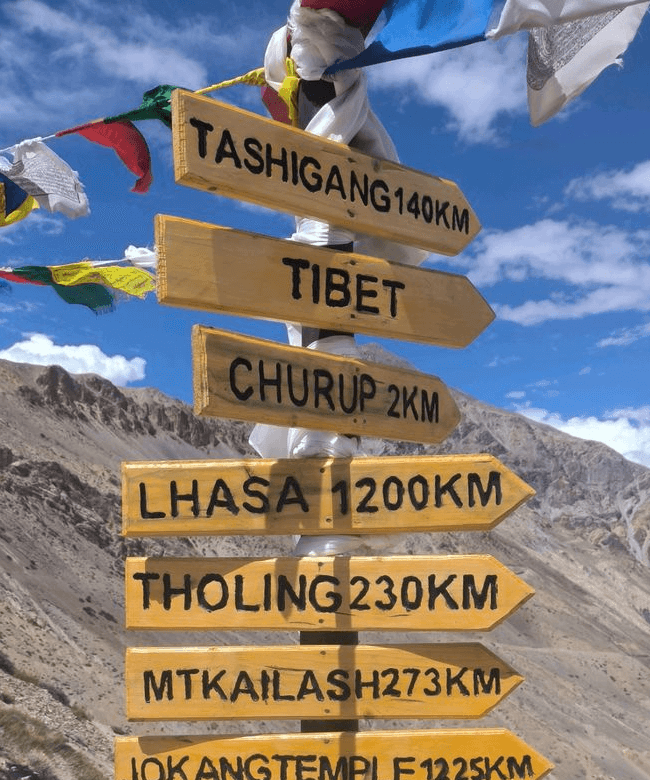
Northeast Unbound — India's Last Great Secret
11 Nights · 12 Days · Guwahati to Guwahati · Max Altitude 2,657m / 8,757ft · ~1,600 kms
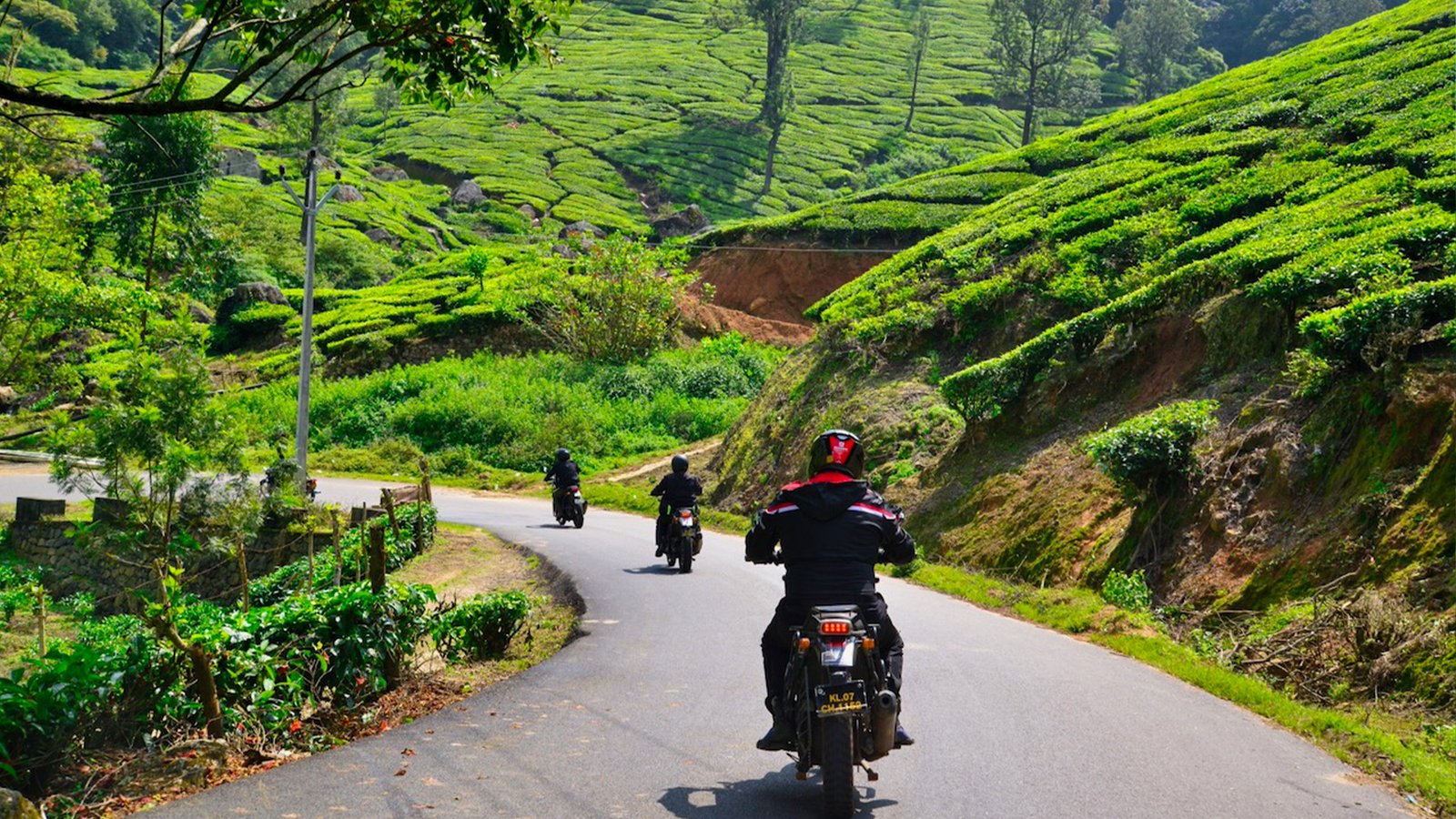
Kerala Unbound — God's Own Country on Two Wheels
9 Nights · 10 Days · Kochi to Kochi · Max Altitude 1,585m / 5,200ft · ~900 kms